

Energy Optimization for Industry and Consulting
– Simulation and real-time optimization of electricity consumption –
adjusted flow helps to economically evaluate industrial energy flexibility, plan its use and implement it as a live system in a cost-optimized manner.
EOIS integrates energy data, forecasts, and optimization logic. This enables transparent evaluation of scenarios and cost-optimized control of flexible systems during operation.
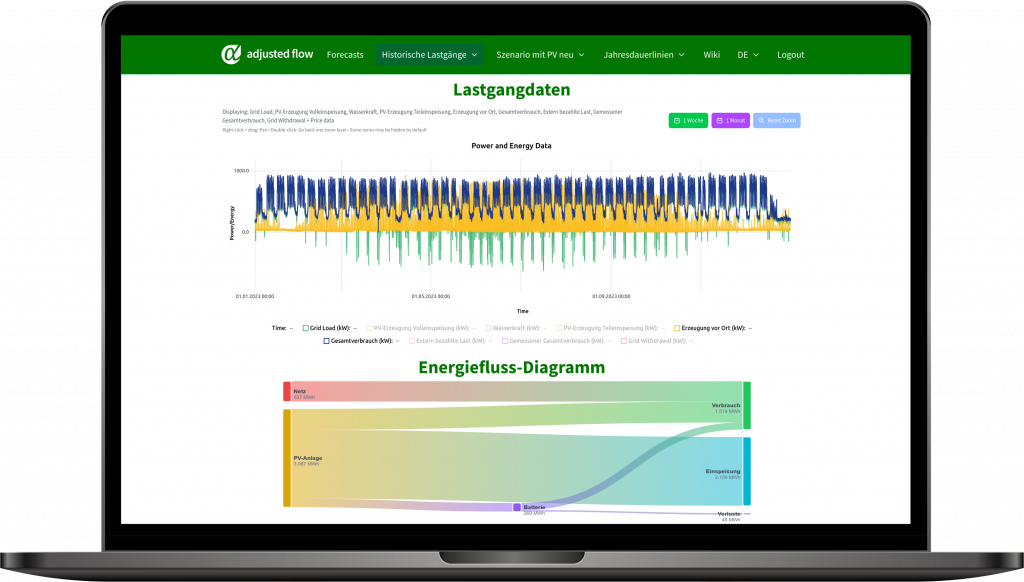
Real-time optimization of flexible systems
What We Offer Industrial Companies
For manufacturing companies with flexible facilities, dynamic electricity prices, and high energy consumption.
adjusted flow identifies opportunities for cost-effective flexibility and integrates them step by step into day-to-day operations—from potential analysis to automated optimization.
In doing so, we consider not only individual facilities, but also the interplay between consumption, generation, electricity prices, operational limits, and production requirements.
- Evaluate Flexibilities and Facilities
- Forecasting consumption and production
- Continuously optimize operating costs
Making flexibility visible
We assess which systems and processes can be operated flexibly—such as battery storage, cooling, heating, compressed air, PV, HVAC, or other shiftable loads.
Evaluating economic potential
We analyze energy data, technical constraints, and electricity prices to establish a solid foundation for decision-making regarding implementation.
Implement optimization in real time
With EOIS, we integrate forecasts, plant models, and interfaces to control flexible plants cost-effectively during operation.
How industrial companies get started with adjusted flow
Industrial energy optimization begins with understanding your facilities, processes, and flexibility.
That’s why we take a structured approach: from identifying potential to implementing a live system.
1. Initial consultation & flexibility brainstorming
Together, we discuss which systems, processes, and flexibility options are generally feasible and which goals are the top priority—such as cost reduction, peak load reduction, self-consumption, or taking advantage of dynamic electricity prices.
2. Assessment of potential
In a concise consulting project, we analyze energy data, technical operating limits, available facilities, and economic levers. This provides a solid foundation for deciding which flexibility options to pursue.
3. Discuss the results & plan implementation
We present the results in a clear and understandable way, work with you to prioritize the most promising measures, and develop a concrete plan for implementation—covering technical, financial, and organizational aspects.
4. Set up the live system
To optimize operations, we implement EOIS, which includes forecasts for consumption and generation, electricity prices, plant models, and the integration of relevant systems and facilities.
5. Continuous optimization
After commissioning, EOIS optimizes flexible systems during operation. This ensures that identified opportunities are not merely calculated once, but are made available on an ongoing basis.
Common questions asked during the initial consultation
- Which systems and processes can be operated flexibly?
- Is it worth investing in battery storage or adopting a flexible driving style?
- How can we better leverage peak loads, self-consumption, or dynamic electricity prices to reduce costs?
- What data do we need for a reliable assessment of potential?
- How do we move from analysis to actual operation?
Scenario tools for energy consultancies
For energy consultants, planners, and service providers who want to calculate customer projects more quickly, compare scenarios, and present results in a clear and understandable way.
adjusted flow helps you evaluate battery storage, dynamic electricity rates, self-consumption, and flexible loads in a structured and transparent manner.
What energy consultations can get done faster
Calculate scenarios quickly
Evaluate common customer questions about battery storage, dynamic electricity rates, self-consumption, and flexibility options using clear assumptions and comparable results.
Compare options side by side
Compare different technical and economic scenarios in a structured way—for example, with and without storage, different rates, or different operating strategies.
Present results clearly
Present results in a way that helps customers better understand the implications, assumptions, and next steps.
Assess complex energy issues more quickly
- What flexibility options are economically viable at the site?
- How do storage, solar PV, rates, and load shifting affect energy costs?
- Can flexible consumers help alleviate grid or transformer constraints? ?
- What operating strategy improves self-consumption, peak loads, and grid procurement?
- How can scenarios be compared and presented in a clear and understandable way?
Scenario tools that fit your workflow
- Analyze existing customer data more quickly
- Standardize recurring calculations
- Adapt functions to internal consulting processes
- Present results in a consistent and customer-friendly manner
- Evaluate flexible consumers, generators, and storage systems together
Our Customers & Partners








- adjusted flow GmbH
- Edelsheimstr. 6 | 76131 Karlsruhe
- info@adjustedflow.com